
Brief
We were contacted by an Assistant Park Manager at Hyde Park during an early planning phase to explore ways to improve accessibility to the Serpentine Lido for swimmers.
One of the existing lake access routes had become unusable due to deterioration of the submerged concrete structure. Rather than undertake a complex and disruptive repair process, the team was keen to investigate alternative solutions that would work with the natural setting, enhance the character of the area, and importantly, improve accessibility for all lake users.
Having seen our portfolio of pontoons, jetties, and disabled-access structures, they contact us for our input. They had initially imagined a submerged ramp with handrails, but remained open to suggestions that could deliver both practicality and aesthetics.
Solution
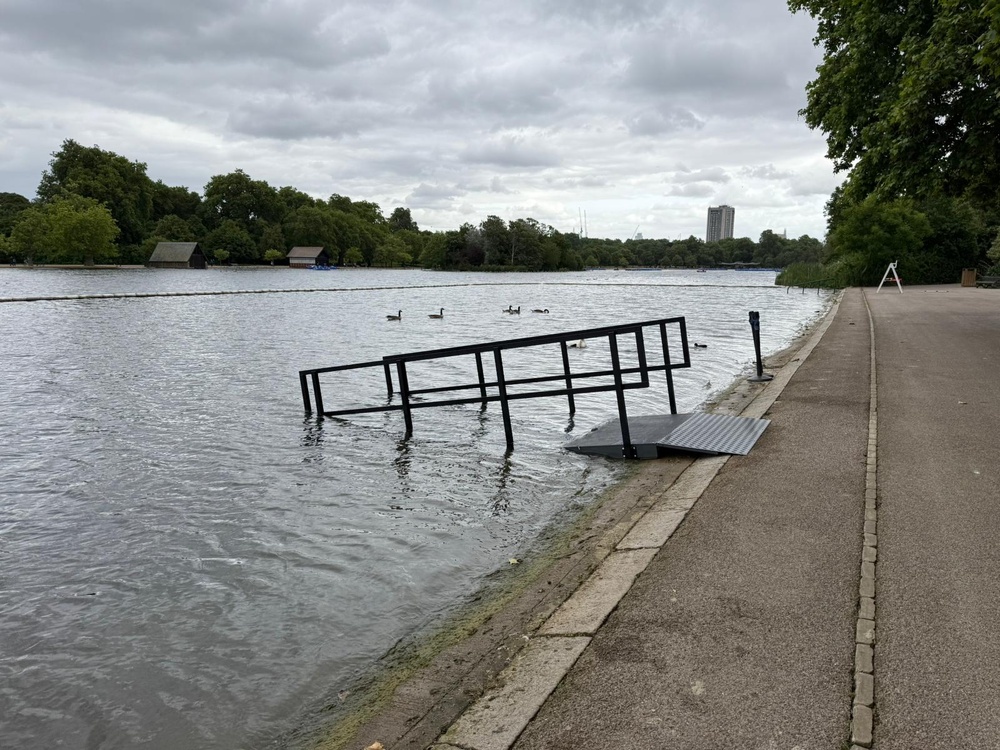
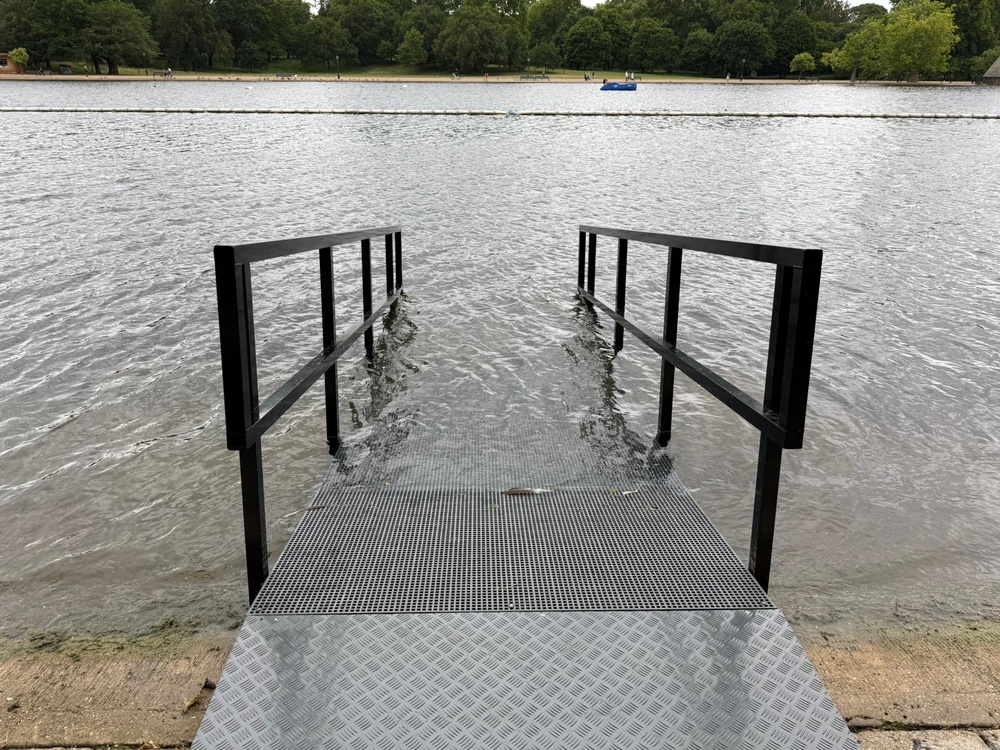
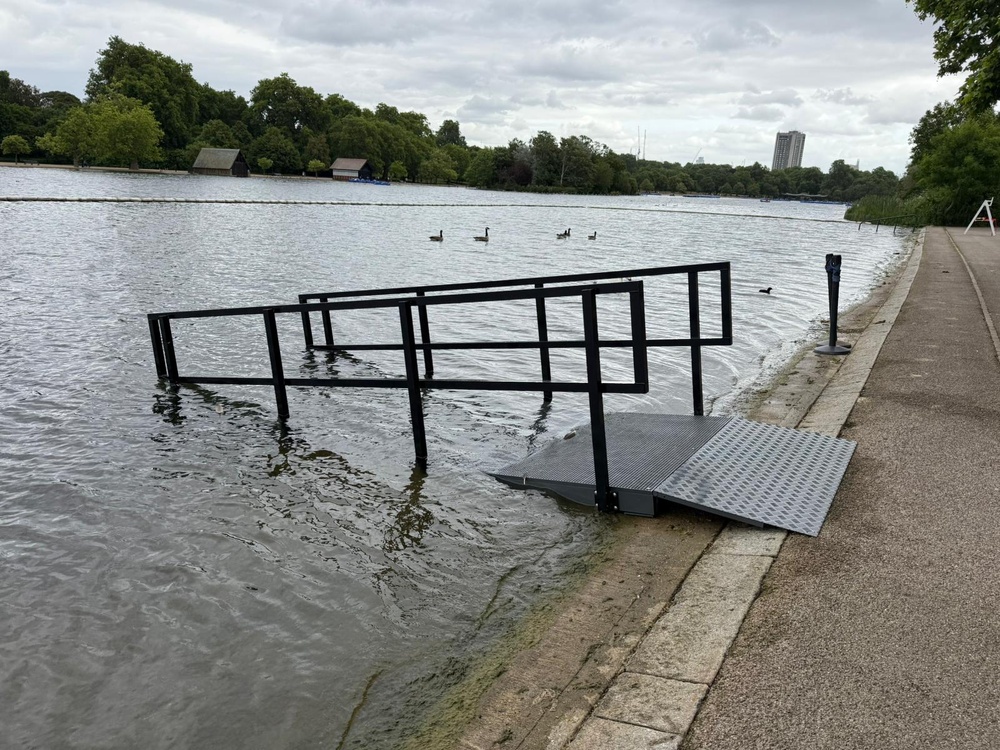
Following a site visit to assess the location and discuss requirements, we proposed a purpose-built aluminium-framed ramp with a non-slip GRP (Glass Reinforced Plastic) grid surface.
A transition plate was incorporated to bridge the damaged concrete area, with a further section extending securely to the lake bed. Handrails were fitted on both sides to provide safety and reassurance for users.
To ensure visual harmony with the environment, the supporting legs were finished in a colour to match the grid surface, while the handrails were coated in a durable black finish for a sleek, unobtrusive look. The entire structure is 1.5 metres wide to allow for easy mobility access when required.
Challenges
One of the priorities for the project was to minimise disruption to park visitors and lake users. To achieve this, the entire structure was pre-fabricated off-site, enabling a swift and straightforward installation. The ramp was successfully fitted in under four hours with no interruption to swimming activities.
Getting materials into central London and into Hyde Park could have posed logistical challenges. However, with careful pre-planning, we ensured the structure could be transported in a single vehicle with trailer, then assembled efficiently on-site.